
14 days on Dutch roads, never past the APK date: how export plates expire
Your export kenteken gives you 14 days on Dutch public roads after the export deregistration, and never more than the APK (the Dutch roadworthiness test) allows. Here is what those two dates mean in practice, what happens afterwards and why extending the insurance does not extend the plates.
- 14 days on Dutch public roads
- Never longer than the APK
- Rules abroad: check before you go

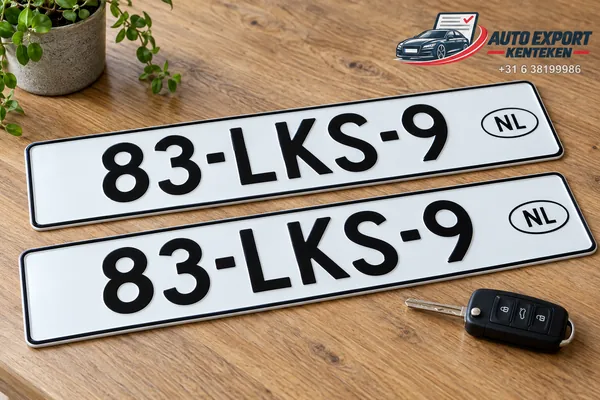
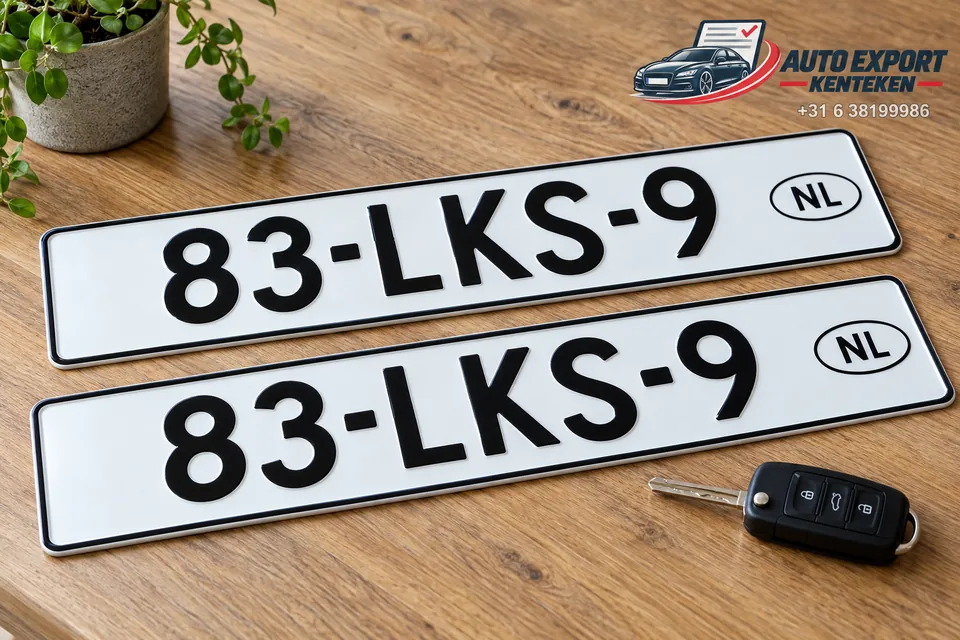

An export kenteken is a temporary arrangement. It allows a vehicle that has left the Dutch register to use Dutch public roads for a short time, within two limits set by the RDW (the Dutch vehicle authority): the end of the 14 days and the expiry date of the APK. Whichever comes first is your last day on Dutch roads.
Knowing both dates before you deregister saves a lot of trouble, especially if you have a long drive ahead or are waiting for a ferry or transport.
The 14-day limit on Dutch export plates
After the export deregistration, the RDW allows the vehicle to be driven on Dutch public roads for 14 more days. During that period it uses the export kenteken: its existing registration number on white plates with black letters and numbers. The plates must stay readable in all weather.
The period starts with the deregistration, not with the purchase or the day you plan to leave. Deregister when you are ready to go, so the days are available for the journey itself. If you will be waiting for a ferry, a transport or an appointment, take that into account when you choose the export date.
The APK date and your export plates
The APK is the Dutch periodic roadworthiness test, comparable to the MOT in the United Kingdom. The RDW sets a second limit alongside the 14 days: the export kenteken is valid for 14 days, but never longer than the APK is valid. Without a valid APK, you may not drive the vehicle on public roads at all.
In practice:
- ask the seller for the APK expiry date before you agree on the export date;
- if the APK runs out within the 14 days, your time on Dutch roads ends on that date;
- if the APK has already expired, white plates will not allow the car to be driven, so ask us about the options before you come.
Which vehicles need a valid APK for the export drive
For the export drive in the Netherlands, this is what each vehicle type needs. The APK rules come from the RDW; the export insurance for caravans and trailers is how we work:
| Vehicle | Insurance for the drive | APK for the drive |
|---|---|---|
| Car, van, company vehicle, motorhome | Yes | Yes |
| Motorcycle, scooter, moped | Yes | No |
| Caravan, trailer | Yes, its own export insurance with us | Only above 3,500 kg |
| Lorry | Yes | Yes |
The number of plates and the details per vehicle are on the page about export plates for a motorcycle, motorhome or trailer.
After 14 days: transport instead of driving the car
Once the 14 days are over, or the APK has run out, a vehicle that is still in the Netherlands may only continue on a trailer or a car transporter. For a vehicle carried this way no driving insurance is usually needed, but the export document remains necessary.
If you are unsure whether your trip fits into the time available, it can make sense to plan transport from the start instead of driving. The same applies when plans change while the car is still in the Netherlands: once the period is over, it can no longer be driven on public roads.
Extending insurance does not extend the export kenteken
These two are often mixed up. The export insurance that comes with your plates runs for 14 days and can be extended, each time by 14 days and only after the insurer agrees. That helps when, for example, registration in the destination country takes longer than planned.
It does not change the rules on Dutch roads: the 14 days and the APK limit stay as they are, and the export kenteken itself is never extended. Read how extending the export plate insurance works and what it costs.
Validity of export plates outside the Netherlands
The 14 days are a Dutch rule for Dutch roads. Every other country, including those you only pass through, decides for itself whether a vehicle on a Dutch export kenteken may drive there and for how long. The RDW says these rules differ from country to country and advises checking them beforehand.
Before you drive on anywhere after the first 14 days, make sure the country you are in allows it and that your insurance is still valid. Ask the authorities of each country on your route before you leave. Our guide to driving abroad on Dutch export plates explains where to ask and which papers to carry.
Planning your export date around the vehicle's deadlines
- Find out the APK expiry date.
- Check the rules of your destination and of every transit country.
- Choose an export date close to your departure.
- Decide on the start date of the insurance.
- Keep the export certificate and the registration card with the cut corner safe for registration at home.
Want to see the whole process first? Start with our overview of Dutch export plates.
Need Dutch export plates today?
Call or message us for free advice or an appointment, also outside office hours. On Sundays a higher rate applies; you always know the price in advance.
Questions about the 14 days on export plates
When do the 14 days on export plates start?
The RDW links them to the export deregistration: from that moment the vehicle may be driven on Dutch public roads for 14 days. So choose the export date with your departure in mind.
My APK runs out next week. How long can I drive?
Until the APK expires, even if that falls within the 14 days. Without a valid APK a car may not be driven on public roads, so check the expiry date before you choose the export date.
Can the 14 days be extended?
No. The export kenteken itself is not extended. What can be extended, by 14 days at a time and after the insurer agrees, is the export insurance. That does not change the 14 days on Dutch roads.
What if the car is still in the Netherlands after 14 days?
Then it may only be moved on a trailer or a car transporter. For a vehicle carried this way no driving insurance is usually needed, but the export document is still required.
My ferry leaves in three weeks. Should I deregister the car now?
Better not. The 14 days on Dutch public roads start with the export deregistration, and they keep running while you wait. Deregister closer to your departure, or plan transport to the port.
Are the plates also valid for 14 days in other countries?
That is for each country to decide. The RDW states that the rules for a Dutch export kenteken differ from country to country, so check with the authorities of your destination and of every transit country before you go.
RDW sources on export plate validity
- RDW: Soorten kentekenplaten
- RDW: Voertuig naar buitenland: kenteken stopzetten
- RDW: Bijzondere kentekenbewijzen
- RDW: Exporting a vehicle
Checked on 6 November 2026