Bought a car from a Dutch seller? The export in your name, step by step
You have found a car in the Netherlands and want to drive it home yourself. Here is what happens on the Dutch side: the export in your name, the papers you and the seller receive, the plates and insurance for the journey, and what remains your task at home.
- Export arranged in your own name
- You leave with the export certificate
- Plates and 14 days of cover for the trip
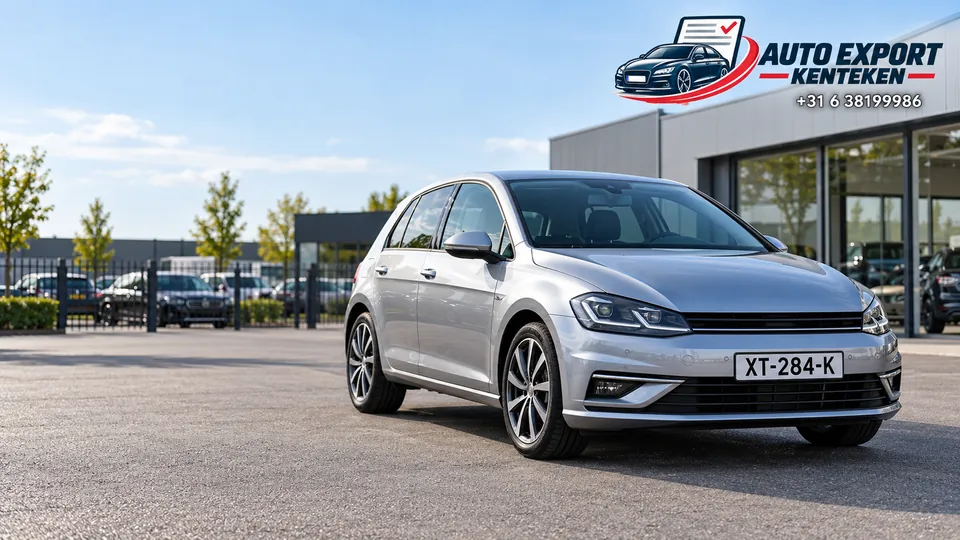
Buying a car in the Netherlands and driving it home yourself, for example to Romania, Lithuania or Ukraine, or to a port for shipping onwards, follows a fixed pattern on the Dutch side. Once you know it, you can agree the right things with the seller and arrive at the desk with everything you need.
We are an RDW-recognised export company in Hengelo. We arrange the export papers, the white plates and the temporary insurance. We do not sell cars, and we do not register vehicles abroad.
Buying a car from a Dutch seller: the export in your name
When a car is sold to a buyer abroad, it is not first transferred to the buyer in the Dutch register. Instead, the RDW (the Dutch vehicle authority) tells sellers to make sure the buyer exports the vehicle in the buyer's own name. For you as the buyer, that means:
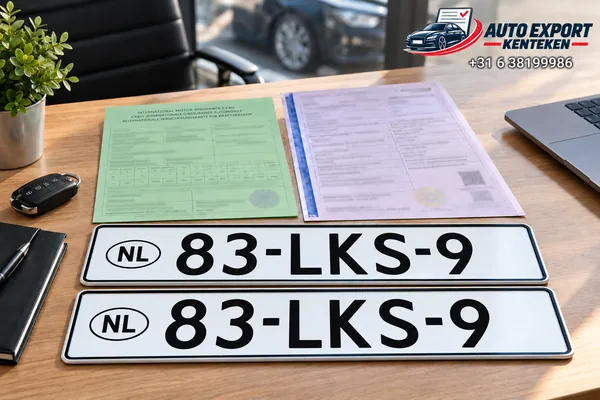
- you receive the kentekenbewijs deel II (the Dutch export certificate) in your name;
- you receive the kentekencard (the Dutch registration card) with one corner cut off;
- the seller receives the vrijwaringsbewijs, the proof of deregistration, which shows that the Dutch registration has ended.
A seller who arranges the export in their own name stays responsible for the vehicle, according to the RDW, until it is registered abroad. The papers themselves are explained in our guide to the Dutch export certificate and deregistration.
What to agree with the seller before the export
Before you travel, agree the following with the seller:
- That the export will be arranged in your name at an export desk.
- That you receive the registration card with its tenaamstellingscode (the registration code that comes with the card), or the old paper registration documents.
- That the yellow Dutch plates stay on the car or come with it, because they are handed in at the export.
- The APK expiry date. The APK is the Dutch periodic roadworthiness test; the export kenteken is never valid for longer than the APK.
- A purchase contract or invoice, which your registration office at home may ask for.
The RDW also advises not to deregister for export until you know which documents your own country requires for registration. Check that with your registration authority before you buy.
What you bring when you collect the car
At the desk you need a valid passport, identity card or driving licence, the vehicle papers, the yellow plates, the current mileage and your full address abroad. For the insurance, we also need the start date, your destination and route, and the details of the policyholder and the driver. If you buy for a company, bring the company name, address and VAT number.
With complete papers, a standard application is usually ready in about 15 minutes. The full list and the order of events are on the page about how to apply for Dutch export plates.
Cannot come yourself? A contact person in the Netherlands may arrange the export for you, according to the RDW. Because the name of whoever arranges the export appears on the export certificate, discuss this with us in advance.
Export plates and cover for the journey home
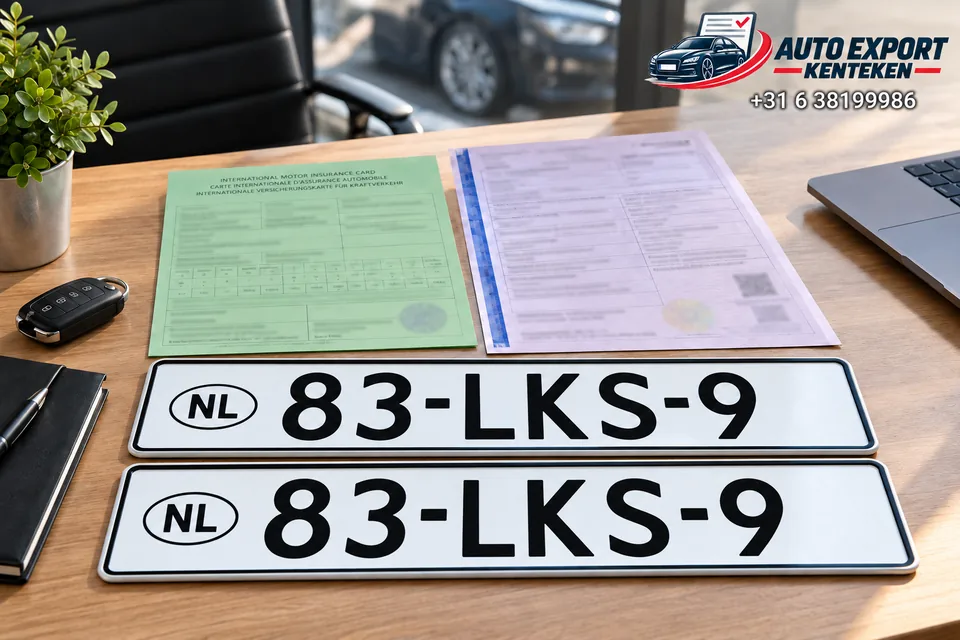
If you drive the car home, it needs white export plates and export insurance. With us, that is 14 days of third-party cover with a Green Card, arranged through our insurance partner. The policy and the Green Card state where and for which driver you are covered.
On Dutch public roads, you may drive for 14 days after the deregistration, never longer than the APK. Beyond the Dutch border, each country, including transit countries, applies its own rules: check them before you set off. Our guide to driving abroad on Dutch export plates shows what to ask. If registration at home takes longer, the insurance can be extended by 14 days at a time after the insurer agrees; the plates themselves are not extended.
Registration in your own country after the export
Registering the car at home is your task, under the rules of your own country. Take the export certificate and the registration card with the cut corner with you, as these are the Dutch documents for registration abroad. Ask your registration authority beforehand what else it needs: the rules there are set by your own country, not by the Netherlands.
Buying for export outside the EU
If the car goes to a country outside the EU, the Dutch government also requires an export declaration with Customs. We can prepare this EX-A document; see exporting a vehicle outside the EU with an EX-A.
Selling your own car for export before you leave
Living in the Netherlands and planning to leave? If you would rather sell your current car than take it with you, we can pass it to our network of car dealers abroad. Read how selling your car for export works.
Need Dutch export plates today?
Call or message us for free advice or an appointment, also outside office hours. On Sundays a higher rate applies; you always know the price in advance.
Buying a Dutch car as a foreign buyer: questions
Does the car have to be registered in my name in the Netherlands first?
No. A car sold to a buyer abroad is not transferred to that buyer in the Dutch register. The RDW advises that the buyer exports it in their own name, so the export certificate is issued to you and the seller receives the proof of deregistration.
Should I get a purchase contract or invoice from the seller?
Yes, that is wise. Your registration office at home may ask for a purchase contract or invoice. For a destination outside the EU, the EX-A also requires an invoice that names you as the buyer.
What do I need from the seller?
The registration card with its tenaamstellingscode, or the old paper registration documents, the yellow Dutch plates and the current mileage. Agree with the seller beforehand how and when you receive them.
Can a friend in the Netherlands collect the car for me?
Yes. The RDW allows a contact person in the Netherlands to arrange the export if you cannot come. It also notes that the name of whoever arranges the export appears on the export certificate, so discuss with us beforehand whose name is needed.
Do you also take care of the registration in my country?
No. We arrange the Dutch side: the export deregistration, the export documents, the white plates and the insurance. Registration at home is up to you and follows the rules of your own country.
How much time do I have to drive the car home?
On Dutch roads you have 14 days after the export deregistration, never longer than the APK is valid. Abroad, each country applies its own rules, so check them for every country on your route.
Official sources for buyers exporting a car
- RDW: Exporting a vehicle
- RDW: Voertuig naar buitenland: kenteken stopzetten
- RDW: Bijzondere kentekenbewijzen
- Business.gov.nl: Exporting vehicles from the Netherlands
Checked on 6 November 2026